Showing posts with label OFW CORNER. Show all posts

Sunday, April 28, 2013

Why Financial Goals Are Important?

- 1 comments
You wouldn't start out on a long trip into unfamiliar territory without a road map, yet many JUAN DELA CRUZ go through life without a concrete plan for their financial future. The road to financial freedom can lead directly to your destination or to a dead end. Specific financial goals and written plans for meeting them help you focus your efforts on the end result. The first steps are to determine your financial status today and then decide what you want to achieve for your future.
Effective goal setting should be SMART!

Goals are like the wheels on your car, they keep you moving in the direction you want to go, and you won't get very far without them. If you haven't started planning for your future, now is the time to begin, no matter what your age is. However, if you are in your twenties, you have a distinct advantage. It will give you the most powerful financial tool: TIME.You'll have to work at it a lot harder if you start later in life.

As the saying goes, "Most people don't plan to fail, they just fail to plan." Without planning, even the best of intentions lead nowhere. Start mapping out your route now. Your entire future depends on it. 

[Continue reading...]

Saturday, April 27, 2013

Who Needs Financial Literacy?

- 0 comments
This article is not mine, I read this from Pesos and Sense website. I want to share it to all so we could learn the importance of why every JUAN DELA CRUZ needs financial education. Sino ba sa atin ang ayaw yumaman? Lahat naman tayo gusto, pero ang tanong... may ginagawa ba tayo para dito? When do you plan to take action? Our ability to save has nothing to do with the size of our income... it has something to do with our discipline. If our problem is our inability to manage our earnings, no amount of earnings will solve our problem. 


Whenever the topic of financial education is brought up, most Filipinos brush it off thinking that it is only for businesspeople or for the “rich”. The truth is, we all need it. If you want to be free financially or if you want to be rich, you need to learn this!
Although we don’t pay much attention to it, it does affect our daily lives. To put a child to school, to own a house, to drive a car, to pay the bills – all of these will be affected by both having and not having the knowledge about handling money wisely.
Financial Literacy

Money and Knowledge

People think that acquiring huge sums of money will solve their problems. It may be true for some, but without the knowledge to handle it correctly, others might find themselves in a more problematic situation.
You may have heard of lotto winners who ended up being bankrupt or in a financial mess. This is what usually happens to instant millionaires who suddenly find themselves rich – in fact, too rich that they do not know what to do with the money anymore.
This is exactly what happened to Dionie Reyes who won 14 million pesos in the PCSO Lotto 6/42 draw last April 22, 2008. After winning, he lived the life of a millionaire.
He bought a P4-million house in an exclusive subdivision, drove a sports utility vehicle, and gave balato ranging from P1,000 – P850,000 to his friends and relatives. He also gambled, womanized, and went out every night. After 3 months, he spent all of his money and ended up in debt.*
People lose money for many reasons, and overspending is one of them. This is the reason why having money and financial knowledge at the same time is the key that will greatly help in improving one’s life. Money and financial knowledge go hand in hand. Just like what the author Robert Kiyosaki said, “Money without financial knowledge is money soon gone.”

Money Begets Money

Our culture has taught us that the sure way to become rich is to have a good education, get a high paying job, and live your dreams. Although that is a good advice, a lot of professionals, OFWs, and fixed-income earners know that it is a cycle of “go to work, receive your salary, and pay for the expenses”. The live-your-dream part is always set aside for the future, hoping that things will get better. They are the people who work for money.
But there are some who learned to make their money work for them. How were they able to do that? They acquired the knowledge of Smart Investing.

Know Your Options!

Did you know that you have different investment options?
Investment instruments like Stocks, Mutual Funds, Real Estate, Insurance, and others can help you achieve your financial goal. You may have heard these investments before, but do you really know how they work?
Most Filipinos, even though they want to invest in these instruments, are afraid to do so because they fear that they will lose their money. And because they don’t understand it, they will not invest at all!
As we always say, take the time to learn so you can take away the fear. Understanding the different kinds of investments available will help minimize the fear of investing.
Once you have acquired the knowledge, you will see that investing isn’t so scary after all. You can sleep better at night knowing that you are taking steps today that can potentially change the way you live your life in the future.

Educate Yourself

Gone are the days when information about money is limited. There are books, articles, websites, and seminars that teach financial education to those who need it the most – the common Filipino. These are the students who want to have a brighter future, the parents who want to provide for their children, the young professionals who want to stop working and do what they really love, the OFWs who just want to return home and watch their children grow, and the thousands of skilled Filipino workers who want to live comfortably.
Are you one of them? It is time for you to act!

[Continue reading...]

Wednesday, March 20, 2013

Financial Planning Pinoy Style!

- 0 comments
I want to share another interesting article I read  from Mr. Randell Tiongson. By the way Mr.Tiongson is a RFP, an advocate of Life & Personal Finance. Hope you find his article not only worth reading but may it also help you to start planning ahead.

Question: How should we do personal financial planning based on our culture? Unlike the west, we heavily support family members. Randi Espera Ongoco (@randieongoco) via Twitter

Answer: I have been a student and a teacher of financial planning for many years, and it is true that we do things very differently here in the Philippines.
It is a common observation that financial literacy is not very high in our beloved nation, which makes it very difficult to do financial planning. To make things worse, the citizens of this nation, and the nation itself have very low savings rates. The Philippines has a savings rate of less than 20 percent while it is estimated that the Filipinos themselves have a savings rate below 10 percent. Reports from the Bangko Sentral ng Pilipinas say that of about 36 million Filipinos with bank accounts (with a total of over P5 trillion), 23 million of us have balances below P5,000.
Filipinos are not much of an investor, which is why our investment market, although performing extremely well, is not as big as it should be. The rate of Filipinos with insurance is likewise low at less than 20 percent of the household heads.
Here’s another disturbing statistic, it is believed that only about 10 percent of Filipinos actually prepare for retirement. Because of all these, a big majority of the population ends up financially dependent on their children during their old age. An SSS (Social Security System) study said that over 70 percent of Filipinos during retirement are living with and are being supported by their children.
There are many issues abound with context to your question. We can’t argue the fact that income opportunities in this nation are really a big problem, but I believe that our financial woes go beyond just income. I have personally been a witness to many individuals who had relatively good income and yet failed miserably with regard to being financially secure. For instance, the increase in the average of income employed by the BPOs and our dear OFWs was not a guarantee to see many of them with a financially secure future.
While the results or the symptoms may seem economic in nature, I believe that our problems are largely behavioral and cultural. It is said that personal finance is 80 percent behavior and only 20 percent skill, a notion that I agree with. In our case, we have big issues with both the 80 percent as well as the 20 percent.
A big behavior issue is that we spend much more than we should and we save far less than what we are supposed to. Don’t you even wonder why our nation now has the record number of malls and it seems that many malls are being built monthly, maybe even weekly? The stark increase in the number of shopping malls through the last 10 years only shows that the income of Filipinos is improving; and yet the increase in savings among us is grossly disproportional.
To make things worse, a big cultural issue that you pointed out is that Filipino parents expect their children to support them financially. While supporting parents financially is very noble, the impact of such actions to many Filipinos results in not being able to save enough for their old years and making themselves dependent on their children in the future; a vicious cycle indeed. A skill issue among many of us is we do not really know how to properly invest and we borrow too much.
Here are my tips for you:
Increase your cash flow. You can do this by earning more money and spending less money. Your biggest asset is yourself. If you constantly invest in your competence and abilities, your income will surely grow. Be disciplined in spending, reduce unnecessary expenses, avoid too much “wants” and evade buying too many “stuff.” Having budgets and sticking to it is your best strategy in better handling your finances. As your cash flow improves, you will begin to generate more savings.
Reduce or eliminate debt. Borrowings, especially unnecessary borrowing such as consumer debt (credit card debt, personal loan, hulugan, etc.) is very costly because of the interest you pay. Also, it is difficult to have a good level of savings when you owe too much as you end up paying debt against saving money.
Take baby steps in savings and investing. Often, we think we always think too big when it comes to saving and investing. In reality, big savings is really just small savings done very regularly. The same goes for investing. You may want to enroll in an auto-debit program of your bank so you will have forced savings. Some banks like BDO and BPI offer auto debit arrangements that go into an investment account like a mutual fund or a unit investment trust fund.
Review your finances periodically. It is prudent that you inspect what you expect. Regularly check your progress vis-à-vis your goals. Always check your spending, ideally on a daily or weekly basis. Review your savings level also, maybe twice a month or once a month. Look at your investment progress and performance at least on a quarterly basis so you can make changes if need be. Regular reviews not only keep you informed, it also motivates you when you actually see progress.
Communicate with family. This is perhaps the most difficult task of all. Respectfully discuss financial matters with affected members of the family. Let them know that while you really want to help members of the family, you are also limited by your resources and your personal obligation to prepare for your own future. Limits or budgets are a good way to objectively set expectations. Other members should also be given the obligation to provide assistance. It is unfortunate that many families rely on just one member (the one who earns the most), but that shouldn’t be the case. Reliance on just one or two members of the family results in a scrounging dependence by other family members. Communication done with utmost respect and a lot of love will solve many issues of family members. Remember, you need to do this so that you will not be a burden to your children in the future.
Financial planning “Pinoy style” is a bit tricky, but it is not rocket science. The only way for this country to really move towards a financially peaceful future is to start planning today.

http://www.randelltiongson.com/financial-planning-pinoy-style/
[Continue reading...]

Monday, March 18, 2013

A letter worth sharing

- 0 comments
This feel worth sharing, It's a letter of an American to Filipinos, it caught my attention and I hope you find it worth reading too. Here it goes:


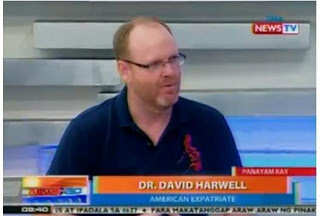
Love letter to Filipinos by David Harwell, PhD

I am writing to thank Filipinos for the way you have treated me here, and to pass on a lesson I learned from observing the differences between your culture and mine over the years.
I am an expatriate worker. I refer to myself as an OAW, an overseas American worker, as a bad joke. The work I do involves a lot of traveling and changing locations, and I do it alone, without family. I have been in 21 countries now, not including my own. It was fun at first.  Now, many years later, I am getting tired. The Philippines remains my favorite country of all, though, and I’d like to tell you why before I have to go away again.
I have lived for short periods here, traveled here, and have family and friends here. My own family of origin in the United States is like that of many Americans—not much of a family. Americans do not stay very close to their families, geographically or emotionally, and that is a major mistake. I have long been looking for a home and a family, and the Philippines is the only place I have lived where people honestly seem to understand how important their families are.
I am American and hard-headed. I am a teacher, but it takes me a long time to learn some things. But I’ve been trying, and your culture has been patient in trying to teach me.
In the countries where I’ve lived and worked, all over the Middle East and Asia, it is Filipinos who do all the work and make everything happen. When I am working in a new company abroad, I seek out the Filipino staff when I need help getting something done, and done right. Your international reputation as employees is that you work hard, don’t complain, and are very capable. If all the Filipinos were to go home from the Middle East, the world would stop. Oil is the lifeblood of the world, but without Filipinos, the oil will not come from the ground, it will not be loaded onto the ships, and the ships will not sail.  The offices that make the deals and collect the payments will not even open in the morning. The schools will not have teachers, and, of course, the hospitals will have no staff.
What I have seen, that many of you have not seen, is how your family members, the ones who are overseas Filipino workers, do not tell you much about how hard their lives actually are. OFWs are very often mistreated in other countries, at work and in their personal lives. You probably have not heard much about how they do all the work but are severely underpaid, because they know that the money they are earning must be sent home to you, who depend on them.  The OFWs are very strong people, perhaps the strongest I have ever seen. They have their pictures taken in front of nice shops and locations to post on Facebook so that you won’t worry about them. But every Pinoy I have ever met abroad misses his/her family very, very much.
I often pity those of you who go to America. You see pictures of their houses and cars, but not what it took to get those things. We have nice things, too many things, in America, but we take on an incredible debt to get them, and the debt is lifelong.  America’s economy is based on debt. Very rarely is a house, car, nice piece of clothing, electronic appliance, and often even food, paid for.  We get them with credit, and this debt will take all of our lifetime to pay. That burden is true for anyone in America—the OFWs, those who are married to Americans, and the Americans themselves.
Most of us allow the American Dream to become the American Trap. Some of you who go there make it back home, but you give up most of your lives before you do. Some of you who go there learn the very bad American habits of wanting too many things in your hands, and the result is that you live only to work, instead of working only to live. The things we own actually own us. That is the great mistake we Americans make in our lives. We live only to work, and we work only to buy more things that we don’t need.  We lose our lives in the process.
I have sometimes tried to explain it like this: In America, our hands are full, but our hearts are empty.
You have many problems here, I understand that. Americans worry about having new cars, Filipinos worry about having enough food to eat. That’s an enormous difference. But do not envy us, because we should learn something from you. What I see is that even when your hands are empty, your hearts remain full.
I have many privileges in the countries where I work, because I am an expat. I do not deserve these things, but I have them. However, in every country I visit, I see that you are there also, taking care of your families, friends, bosses, and coworkers first, and yourselves last. And you have always taken care of me, in this country and in every other place where I have been.
These are places where I have been very alone, very tired, very hungry, and very worried, but there have always been Filipinos in my offices, in the shops, in the restaurants, in the hospitals, everywhere, who smile at and take good care of me. I always try to let you know that I have lived and traveled in the Philippines and how much I like your country. I know that behind those smiles of yours, here and abroad, are many worries and problems.
Please know that at least one of us expats has seen what you do for others and understands that you have a story behind your smiles. Know that at least one of us admires you, respects you, and thanks you for your sacrifices. Salamat po. Ingat lagi. Mahal ko kayong lahat.
David H. Harwell, PhD, is a former professor and assistant dean in the United States who now travels and works abroad designing language training programs. He is a published author and a son of a retired news editor.
[Continue reading...]

Tuesday, December 18, 2012

What Overseas Filipino Workers Must Do While Working Abroad

- 0 comments

I would like to share this video to all OFWs around the world.
May this give you an insight of what you must do and learn what options you have for saving and investing.


[Continue reading...]
 
Copyright © . Get A Grip Pinoy - Posts · Comments
Theme Template by BTDesigner · Powered by Blogger